Review: Cute Chef Girl Vector Pack 01 for Embroidery
As a designer who spends half my day staring at stitch charts and the other half trying to convince clients that embroidery is worth the investment, I am always skeptical of new assets. "Cute" is a common descriptor in the digital asset world, but it rarely translates well to thread. A design might look adorable on a backlit screen, only to become a muddy, indistinguishable blob after ten minutes under the needle of an embroidery machine. That is why I take every embroidery project seriously before recommending it to my network of Etsy sellers, boutique owners, and fellow crafters.
I recently evaluated the Cute Chef Girl Vector Pack 01 with a specific goal in mind: determining its viability for real-world commercial use. This falls under the broader categories of Illustrations and Graphics, which often require significant conversion work before they can touch fabric. My question was simple: Does this design hold up when stitched? Is it suitable for high-volume production, or is it better suited for one-off personalized gifts? Below is my honest breakdown based on practical application.
The First Impression and Visual Personality
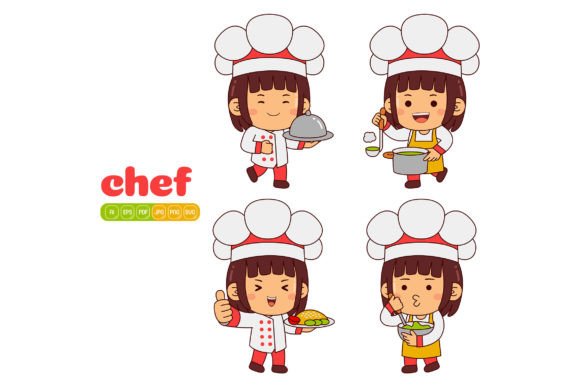
When you first load the Cute Chef Girl Vector Pack 01, the mood is immediately inviting. It leans heavily into the whimsical, approachable aesthetic that performs exceptionally well in the kitchen and nursery markets. The character design features clean lines and a playful expression, which suggests a friendly, non-intimidating brand voice. For a handmade product intended to evoke warmth, this is a strong starting point.
However, from a technical design standpoint, the vector nature of the source file means we are looking at shapes rather than stitches. The layout feels balanced, with enough negative space around the character to allow for effective framing. This is crucial because, unlike a printed graphic where details can be microscopic, embroidery relies on bold silhouettes. The visual personality here is distinct enough to stand alone without needing excessive background clutter, which is a huge plus for custom apparel where simplicity often equals professionalism.
Real-World Application: Where This Design Shines
In my experience, the best machine embroidery design choices are those that align naturally with the product’s function. The Cute Chef Girl Vector Pack 01 screams "kitchen" and "home." I envision this design performing beautifully on a variety of items that serve as both functional tools and decorative statements.
- Aprons and Kitchen Towels: This is the most obvious fit. A chef girl motif on a linen apron adds a touch of charm without overwhelming the garment. It works particularly well as a small chest pocket accent or centered on the lower hem of a tea towel.
- Baby and Nursery Items: The soft, cartoonish style makes it ideal for baby embroidery. Think onesies, burp cloths, or muslin blankets. Parents love designs that feel gentle and sweet, and this character delivers that vibe perfectly.
- Tote Bags and Market Bags: For the crafter business crowd, a canvas tote featuring this design is a winner. It appeals to food lovers, home cooks, and parents buying school lunches. It’s versatile enough to be used for grocery runs or as a gift bag for baked goods.
- Holiday Gifts: During the winter holidays or Mother’s Day, this design can be adapted for sweaters or caps. It has a universal appeal that transcends specific trends, making it a safe bet for seasonal inventory.
Furthermore, because the source is a vector pack, it offers flexibility for digital product sellers. You can create printable mockups quickly to showcase how the design looks on different backgrounds before committing to physical production. This allows for efficient testing of market interest.
Technical Considerations and Stitching Challenges
No review is complete without addressing the potential pitfalls. Even the cutest design can fail if the execution isn’t right. Here is what you need to watch out for when converting these graphics into an embroidery file.
Stitch Density and Detail Level: The vector lines may appear thin on screen, but in embroidery, too much fine detail can lead to puckering or thread breaks. If the design includes intricate facial features or tiny text, you must ensure the stitch density is appropriate. Dense areas on thin fabrics will cause distortion. I recommend simplifying any overly complex curves during the digitizing process to maintain clarity.
Fabric Compatibility: This design requires a stable base. Avoid using it on highly textured fabrics like heavy bouclé or stretchy jersey unless you use a high-quality stabilizer. Thin fabrics like silk or lightweight rayon will likely pucker if the design has large fill areas. For sweatshirt embroidery, a fleece-backed sweatshirt provides the perfect stability, allowing the threads to sit flush and vibrant.
Color Contrast: Since the pack allows for easy color changes, you have creative freedom. However, remember that thread colors do not match ink perfectly. A pastel pink on screen might look like a bright coral in thread. Always test your thread colors against your actual fabric swatch. Dark fabrics will require a backing layer or white underlay to make the colors pop, while light fabrics offer more versatility.
Where to Use Carefully
While this design is versatile, there are certain applications where it might struggle:
- Small Hoop Sizes: If you attempt to stitch this on a very small area, such as a hat brim or a sock cuff, the details may become lost. Ensure the final stitched size is large enough to resolve the character’s features.
- Curved Surfaces: While it can work on caps, the flat nature of the vector art might look distorted if not properly warped during digitizing. Curved surfaces require careful planning to avoid stretching the image.
- Dense Stitch Areas: Avoid placing this design over existing seams or pockets where the fabric is already thick. The added bulk can be uncomfortable and difficult to hoop securely.
Impact on Brand and Customer Perception
Using a cohesive design asset like Cute Chef Girl Vector Pack 01 helps build brand consistency. When customers see the same charming aesthetic across your small shop product line—from tags to packaging to the actual item—it creates a memorable identity. It signals that you care about the details, which builds trust.
For commercial embroidery projects, this design strikes a balance between professional and playful. It is not so childish that adults would reject it, nor so serious that it lacks warmth. This broad appeal increases your potential customer base. Whether you are targeting a local bakery for branded uniforms or selling online to individual buyers, the design has the adaptability to meet those diverse needs.
Final Designer Notes and Recommendations
Before integrating Cute Chef Girl Vector Pack 01 into your production workflow, I strongly advise taking the following steps:
- Test on Scrap Fabric: Never run a full production batch without a test stitch-out. Check for thread tension issues, registration accuracy, and overall visual impact.
- Check Licensing: Since this is a graphics asset, verify the license terms. Confirm whether you can sell finished physical items and if there are restrictions on the number of units or types of products.
- Optimize for Digitizing: If you are digitizing this yourself, simplify paths where possible. Use a combination of satin stitch for outlines and fill stitch for larger areas to reduce thread usage and improve durability.
- Consider Black and White Mockups: View the design in grayscale to ensure the contrast levels work. If it loses definition in black and white, it will likely struggle in color.
In conclusion, Cute Chef Girl Vector Pack 01 is a solid choice for designers looking to add a touch of culinary charm to their repertoire. It is well-suited for personalized gifts, craft fair products, and boutique branding. With proper attention to fabric selection, stabilizer use, and stitch optimization, this design can help you create high-quality, desirable finished product offerings that resonate with customers. Just remember: the vector is just the blueprint; the magic happens in the stitching.